



Key Takeaways
- Brent crude futures surged more than 4% to approximately $106 per barrel following Trump’s dismissal of Iran’s diplomatic overture
- President Trump declared Iran’s counterproposal “TOTALLY UNACCEPTABLE,” ensuring the continued blockade of the Strait of Hormuz
- Tehran’s proposal included relocating enriched uranium to a neutral nation while maintaining nuclear infrastructure
- Saudi Aramco’s chief executive reports weekly losses of 100 million barrels from global markets
- An anticipated meeting between Trump and Chinese President Xi Jinping may address the Iranian situation
Global energy markets experienced significant volatility Monday as crude oil prices surged following President Donald Trump’s rejection of Iran’s diplomatic response to American peace terms, with Brent crude approaching the $106 per barrel threshold.
The American president took to social media to characterize Tehran’s counterproposal as “TOTALLY UNACCEPTABLE,” effectively ending speculation that a resolution to the nearly 10-week conflict might be imminent.
Brent crude futures experienced a peak increase of 4.6%, reaching nearly $106 per barrel before moderating slightly. Meanwhile, West Texas Intermediate approached the $98 per barrel level.
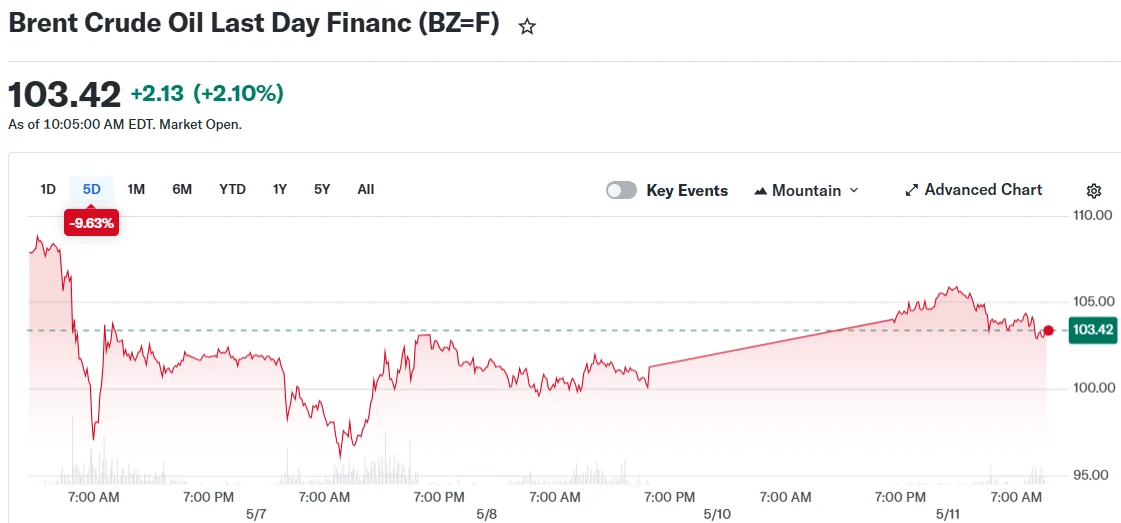
The rally represents a dramatic reversal from the previous week, when both benchmark contracts declined over 6% amid optimism that Washington and Tehran were approaching a provisional arrangement to restore maritime traffic through Persian Gulf waterways.
According to reports, the American proposal demanded Iran cease uranium enrichment activities for two decades, eliminate existing enriched uranium reserves, and decommission critical nuclear infrastructure. In return, Tehran would receive sanctions relief and cessation of military operations.

Iran’s counter-response, delivered via Pakistani intermediaries, requested sanctions removal, withdrawal of American naval forces from the Strait of Hormuz vicinity, and acknowledgment of Iran’s sovereign right to maintain limited nuclear capabilities.
The Wall Street Journal indicated that Iran proposed diluting portions of its highly enriched uranium inventory and relocating remaining materials to a neutral country. Iranian officials contested elements of this reporting.
Economic Impact of Maritime Blockade
The Strait of Hormuz typically facilitates approximately 20% of global oil transportation. The waterway has remained substantially closed throughout the hostilities, severing crude, natural gas, and refined product shipments to international markets.
Amin Nasser, chief executive of Saudi Aramco, indicated that the global oil market is experiencing weekly losses of 100 million barrels. He cautioned that prolonged disruptions extending into June could delay market normalization until the following year.
A Goldman Sachs market survey revealed that most respondents anticipate continued disruption of strait transit beyond the conclusion of June.
On Sunday, a drone attack ignited a commercial vessel near Qatari waters. Both the United Arab Emirates and Kuwait reported intercepting threatening drone activity, underscoring the persistent dangers facing regional maritime operations.
Emily Ashford of Standard Chartered said the situation remains a “stalemate,” with more barrels being lost every day.
Potential Diplomatic Breakthrough Through U.S.-China Summit
President Trump’s scheduled meeting with Chinese President Xi Jinping this week may prove pivotal. American officials indicate Trump intends to address China’s relationship with Iran, encompassing financial support Beijing provides Tehran and possible arms transfers.
ING analysts said there is a “glimmer of hope” that the Trump-Xi meeting could push Iran closer to a deal, given China’s economic influence over Tehran.
Israeli Prime Minister Benjamin Netanyahu stated during a CBS 60 Minutes interview Sunday that hostilities with Iran continue and that additional measures are necessary to eliminate Iran’s nuclear capabilities.
Recent Chinese customs data revealed a 20% year-over-year decline in April crude oil imports, marking the lowest level since July 2022.
Get 3 Free Stock Ebooks
Discover top-performing stocks in AI, Crypto, and Technology with expert analysis.
- Top 10 AI Stocks - Leading AI companies
- Top 10 Crypto Stocks - Blockchain leaders
- Top 10 Tech Stocks - Tech giants



