



Key Highlights
- Bitcoin surged beyond $80,000 for the first time since January, sparking widespread forced liquidations
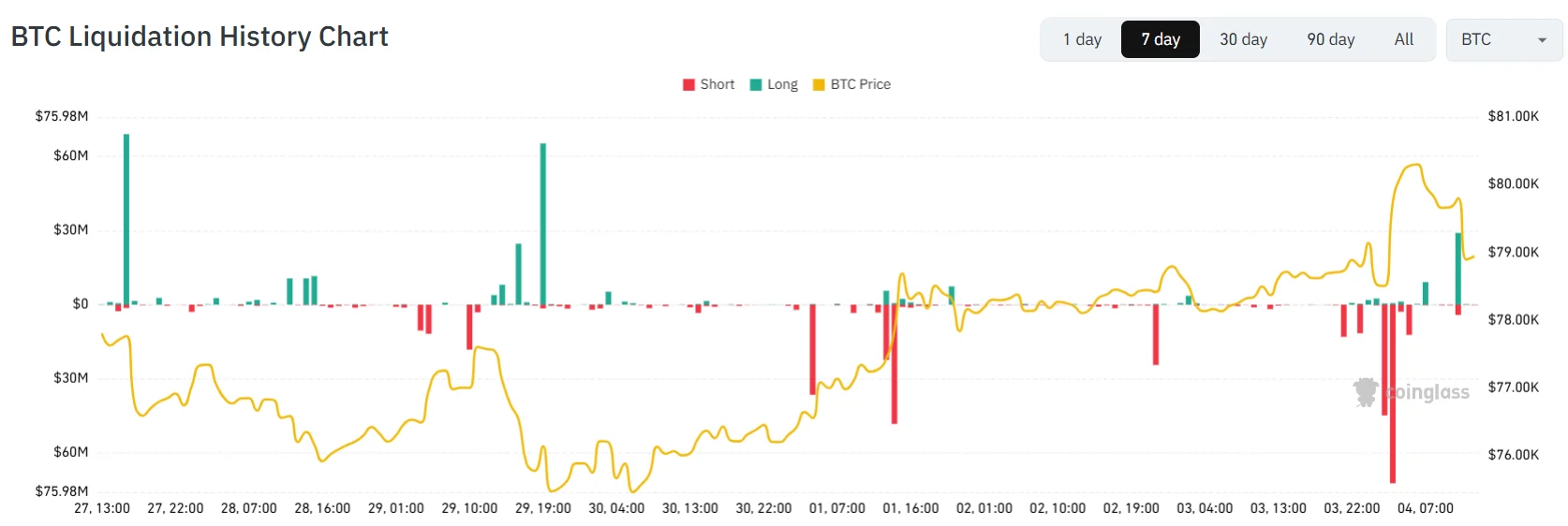
- Approximately $150 million worth of short positions were eliminated in just one hour
- Before the breakout, 62.8% of futures traders on Binance held short positions, with negative funding rates
- The rally was powered by leverage and ETF capital flows rather than genuine spot market demand
- Market forecasts on Polymarket suggest only a 23% probability of Bitcoin hitting $90,000 this month
Bitcoin shattered the $80,000 barrier on Sunday, marking its first venture above this threshold since January. The rapid price movement caught overleveraged traders off guard, particularly those betting against the cryptocurrency.
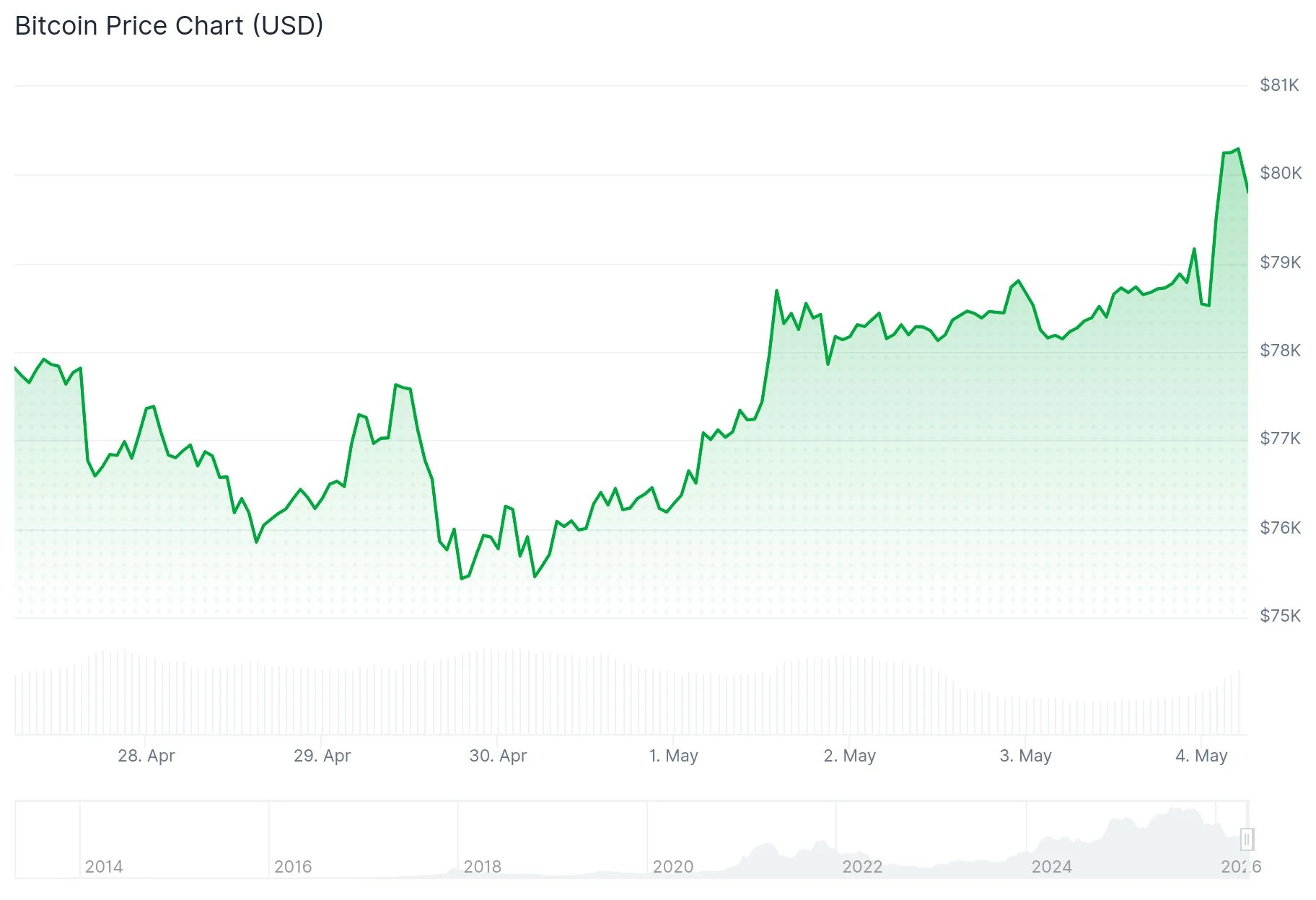
Data from Bitcoin.com News reveals that cryptocurrency short positions totaling $150 million were forcibly closed during a single 60-minute period. Leading up to this sharp movement, nearly two-thirds (62.8%) of active futures contracts on Binance were positioned short.
The funding rate had already dipped into negative territory at -0.0051%, meaning those holding short positions were actually compensating long position holders on a daily basis to maintain their trades. Ironically, they were paying a premium to hold the very positions that would ultimately destroy their accounts.
Anton Palovaara, who founded Leverage.Trading, provided clarity on the situation: “62% of Binance futures traders were short, and funding was negative. The market was literally paying them to hold the position. Bitcoin broke $80,000 and liquidated $150 million of them anyway. The issue was not direction. They ran out of margin before the move resolved. Being paid to hold does not mean you survive it.”
This represents a crucial distinction in trading mechanics. Investors holding spot positions can endure drawdowns and wait for prices to recover. Futures traders, however, face automatic position closure when their margin depletes to zero—there’s no waiting period, and capital is instantly wiped out.
Derivatives Markets Amplified the Movement
A significant concentration of call options existed at the $82,000 strike price before the surge. When gamma exposure concentrates at specific price levels, market makers hedging their positions sell into rallies, creating natural resistance zones precisely where bullish momentum needs breakthrough strength.

The combination of short squeeze dynamics and options market positioning created a reinforcing effect, propelling Bitcoin decisively above $80,000.
However, despite the impressive price action, fundamental demand metrics paint a more nuanced picture. CoinDesk, referencing data from CryptoQuant, indicates that spot market demand continues to show contractionary trends.
Institutional Flows Diverge From Retail Demand
Despite $2.7 billion flowing into Bitcoin ETFs across a three-week span, this capital hasn’t generated corresponding support in spot markets. The current rally appears driven primarily by leveraged positioning and institutional ETF participation rather than organic buying pressure from direct market participants.
According to Polymarket’s current pricing, the probability of Bitcoin reaching $85,000 within this month stands at 56%, while the odds of touching $90,000 are considerably lower at just 23%.
The $82,000 price level represents a critical zone with substantial call option concentration, where market maker hedging activity creates natural selling resistance precisely where bullish momentum requires clearance.
Current market data shows Bitcoin trading above $80,000 after liquidating $150 million from the 62.8% of Binance futures traders who were positioned short, while fundamental spot demand indicators remain in contraction.
Get 3 Free Stock Ebooks
Discover top-performing stocks in AI, Crypto, and Technology with expert analysis.
- Top 10 AI Stocks - Leading AI companies
- Top 10 Crypto Stocks - Blockchain leaders
- Top 10 Tech Stocks - Tech giants



