


Key Takeaways
- A prominent crypto executive believes digital asset markets will continue thriving regardless of the CLARITY Act’s legislative fate
- Both the SEC and CFTC are actively developing regulatory guidelines that provide necessary clarity for cryptocurrency businesses
- A bipartisan stablecoin yield framework from Senators Tillis and Alsobrooks resolves the bill’s final major obstacle
- The agreement prohibits deposit-like yield structures while permitting rewards linked to genuine user engagement
- Major players including Coinbase, Circle, and the Blockchain Association endorsed the framework and called for swift committee action
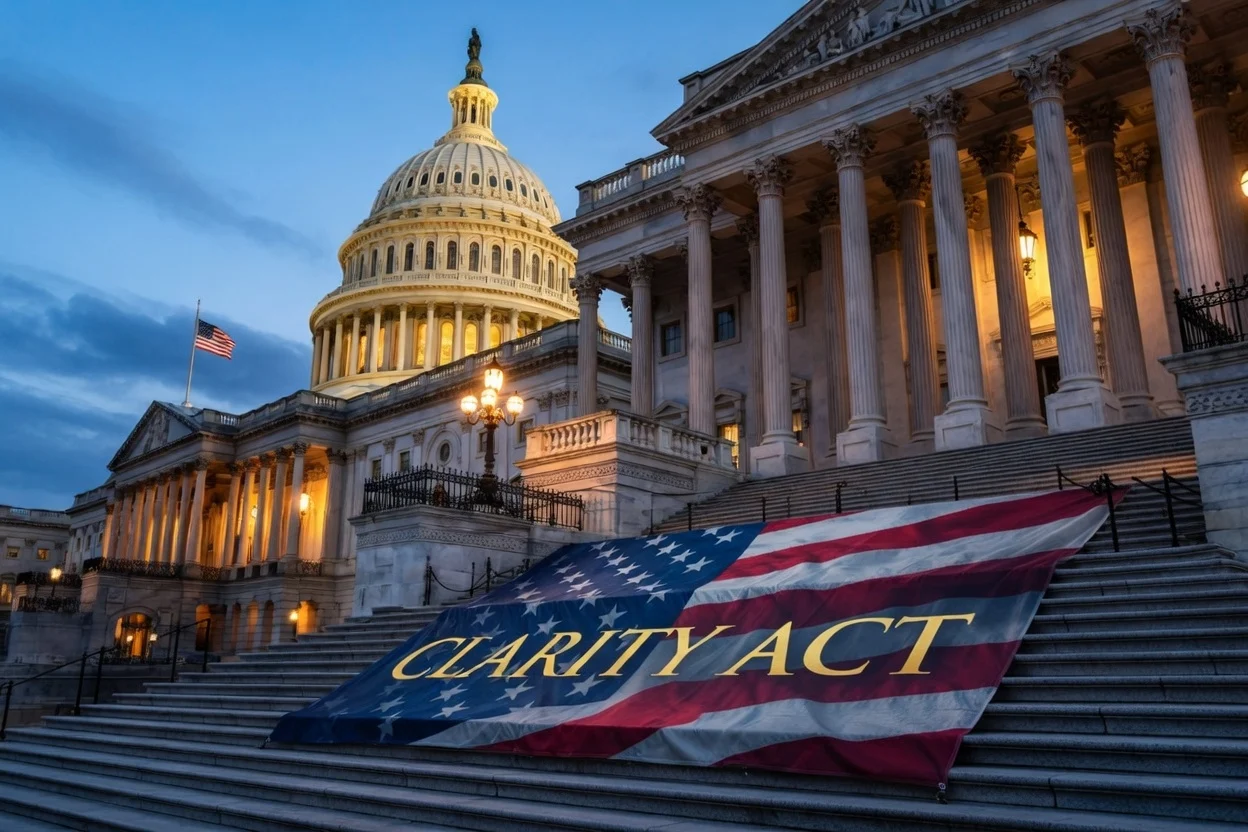
The path toward a Senate vote on the CLARITY Act has become clearer following a breakthrough agreement on stablecoin yield provisions. However, industry leaders suggest the cryptocurrency sector is positioned to thrive whether or not the legislation becomes law.
During an appearance on Cointelegraph’s Chain Reaction podcast Friday, Chris Perkins, who leads 250 Digital Asset Management, expressed confidence that the cryptocurrency industry possesses sufficient tools for success without additional Congressional action.
Perkins highlighted the regulatory work being conducted by SEC Chair Paul Atkins and CFTC Chair Michael Selig, emphasizing that both agencies are actively establishing policies and creating precedents on a daily basis.
“What we’re receiving from these regulators is precisely what the industry has lacked for years — predictability, consistency, and most importantly, clear classifications,” Perkins explained.
He described a fundamental transformation in how security designation impacts digital asset projects. During Gary Gensler’s tenure as SEC Chair, receiving a security classification typically resulted in enforcement actions, exchange delistings, and regulatory dead ends. The current environment represents a dramatic reversal.
“Previously, a security classification spelled doom for crypto projects. Today, operating as a security provides legitimate advantages,” Perkins observed.
Perkins acknowledged that formal legislation would provide greater permanence against future political shifts. “Congressional action creates durability — reversing enacted laws proves exceptionally difficult,” he noted.
Breaking Down the Yield Framework
Friday brought the release of compromise language from Senators Thom Tillis and Angela Alsobrooks addressing stablecoin yield mechanisms, which represented the legislation’s remaining contentious issue.
The proposed framework prohibits cryptocurrency platforms from offering interest or returns on stablecoin holdings that function similarly to traditional bank deposit accounts. Conversely, it permits reward structures connected to actual platform engagement and transaction activity.

Companies will need to restructure their incentive programs away from passive holding strategies toward active utilization models to meet compliance standards.
Blockchain Association CEO Summer Mersinger praised the development while cautioning that regulatory uncertainty continues driving innovation and investment overseas.
Dante Disparte, Circle’s Chief Strategy Officer, offered unqualified support for the compromise, referencing USDC’s expanding role in payment systems and financial markets.
Coinbase faced particularly high stakes in the negotiations. CEO Brian Armstrong responded to the release with a concise “Mark it up” message. Chief Legal Officer Paul Grewal emphasized that the framework safeguards reward programs based on legitimate user participation.
Lingering Questions From Stakeholders
The Crypto Council for Innovation expressed support while flagging specific concerns. CEO Ji Hun Kim noted the current language extends beyond last year’s GENIUS Act, which restricted only issuer-provided rewards. This iteration applies broadly across all digital asset market participants.
Despite reservations, Kim encouraged committee advancement. “Our primary objective must be ensuring American leadership in cryptocurrency innovation,” he stated on X.
Senator Bernie Moreno projected the CLARITY Act would pass before May concludes. Senator Cynthia Lummis declared in April: “This represents our moment — delay means defeat.”
The Senate Banking Committee had previously delayed markup proceedings scheduled for January.
Get 3 Free Stock Ebooks
Discover top-performing stocks in AI, Crypto, and Technology with expert analysis.
- Top 10 AI Stocks - Leading AI companies
- Top 10 Crypto Stocks - Blockchain leaders
- Top 10 Tech Stocks - Tech giants



