


Key Takeaways
- Banking Committee Chair Tim Scott requires unanimous Republican backing from all 13 GOP members before advancing the CLARITY Act
- Sen. John Kennedy remains opposed, partly due to grievances over an unrelated housing measure
- Sen. Thom Tillis advocates for mid-May proceedings but insists on ethics provisions
- Outstanding questions around stablecoin incentives, decentralized finance protections, and presidential crypto interests persist
- Industry analysts estimate passage probability between 15% and 25%
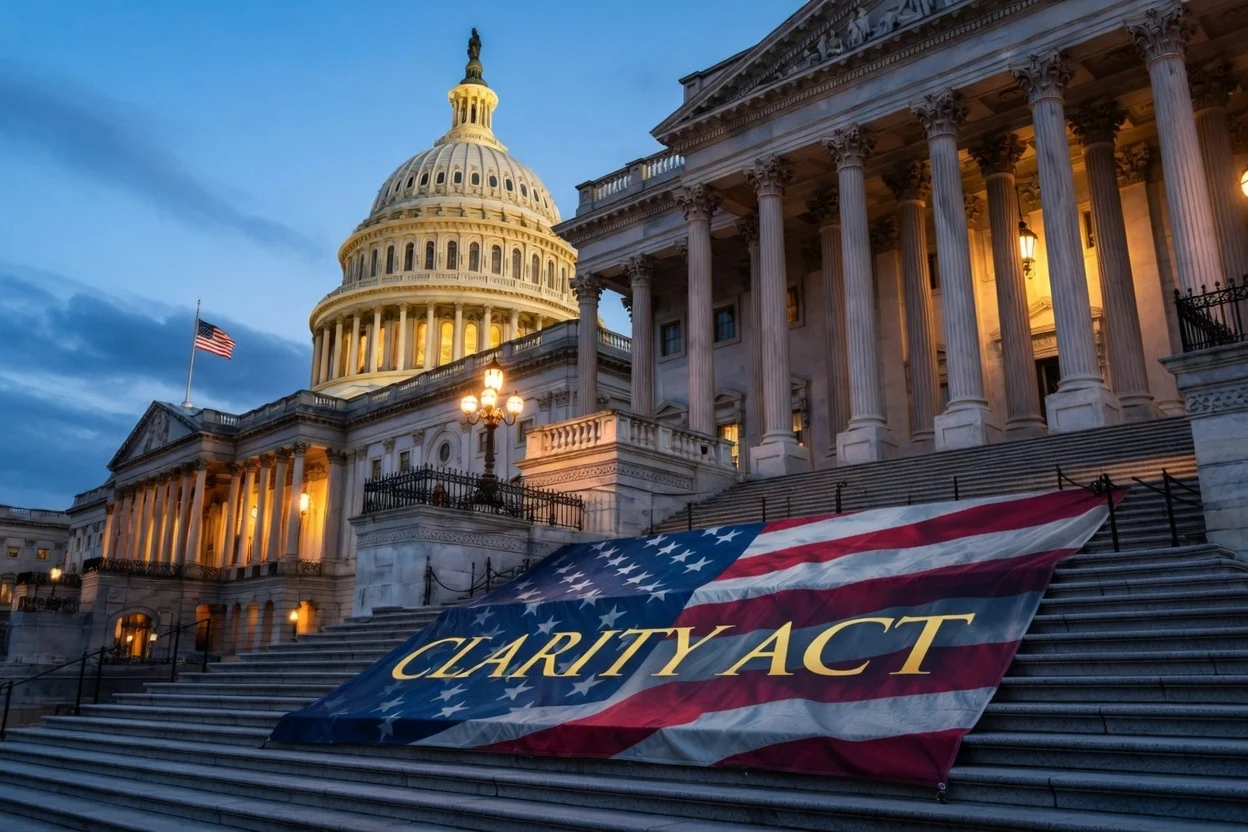
A comprehensive cryptocurrency regulatory framework known as the CLARITY Act is approaching a potential committee vote in the Senate this May. However, internal Republican disagreements and contentious policy debates are creating substantial obstacles.
Tim Scott, who chairs the Senate Banking Committee, has stated his intention to secure unanimous backing from all 13 Republican committee members before proceeding. While he confirmed recent support from Sen. Thom Tillis and several colleagues, complete party alignment remains elusive.
In remarks to Fox Business, Scott characterized negotiations as being in the “red zone,” expressing optimism about achieving a deal. His timeline envisions a bipartisan committee vote in May, with floor consideration potentially happening in June or July.
Tillis, a pivotal Republican voice in negotiations, has publicly urged Scott to schedule the markup and indicated updated legislative text could be available shortly beforehand. Nevertheless, Tillis established a clear boundary: he will not support the measure if it advances without ethics safeguards intact.
Sen. John Kennedy represents another holdout position. Reporting from Punchbowl News suggests Kennedy’s hesitation relates partially to broader frustrations with the House and administration regarding a separate housing measure that has languished—not exclusively concerns about cryptocurrency policy.
Presidential Crypto Holdings and Ethics Provisions Create Tension
Democratic lawmakers have elevated ethics considerations to a priority position. Sen. Angela Alsobrooks stated that achieving bipartisan committee approval requires addressing illicit finance safeguards and ethics frameworks first.

Chair Scott has maintained that ethics regulations fall outside his committee’s purview. This jurisdictional dispute leaves the matter unresolved and may necessitate separate legislative action before any full Senate vote can proceed.
President Trump’s cryptocurrency business dealings have amplified the controversy. Bloomberg analysis suggests Trump has generated approximately $1.4 billion from digital asset ventures, including involvement with World Liberty Financial, a DeFi and stablecoin initiative. The Trump family additionally maintains a 20% ownership interest in American Bitcoin, a mining operation.
Recently, Trump organized a Mar-a-Lago event for individuals holding the TRUMP memecoin, prompting sharp criticism from Democratic members of Congress.
The House-passed version of this legislation, known as Clarity, contains language prohibiting congressional members and senior executive officials from launching digital commodities during their tenure. This provision has emerged as a non-negotiable issue for the White House.
Stablecoin Compensation and Decentralized Finance Remain Contentious
Beyond ethics debates, the legislation has encountered resistance regarding stablecoin reward mechanisms. Public disagreements between a prominent White House cryptocurrency adviser and banking institutions have become increasingly visible.
Decentralized finance provisions are facing particular scrutiny. Legislators and law enforcement agencies worry that certain protections for developers could inadvertently create obstacles for prosecuting financial crimes.
Senate Judiciary Committee Chair Chuck Grassley is currently engaged in discussions with Sen. Cynthia Lummis to resolve these law enforcement apprehensions.
The legislation confronts a rigid timeline. The Senate enters a five-week August recess before midterm elections. Without clearing committee review and reaching the floor beforehand, the bill’s prospects diminish considerably.
One cryptocurrency sector source assessed passage likelihood this year at just 15% to 25%. Research organization Galaxy offered a moderately more optimistic estimate of approximately 50%.
Get 3 Free Stock Ebooks
Discover top-performing stocks in AI, Crypto, and Technology with expert analysis.
- Top 10 AI Stocks - Leading AI companies
- Top 10 Crypto Stocks - Blockchain leaders
- Top 10 Tech Stocks - Tech giants



