


TLDR
- Federal budget plan seeks to eliminate crypto wash sale advantages and harmonize digital asset taxation with traditional securities.
- Traders would face restrictions on claiming losses when repurchasing identical cryptocurrency within a 30-day window.
- A 30 percent excise tax on electricity consumption targets large-scale cryptocurrency mining facilities.
- Foreign cryptocurrency account holders must disclose holdings exceeding $50,000 under expanded FATCA compliance.
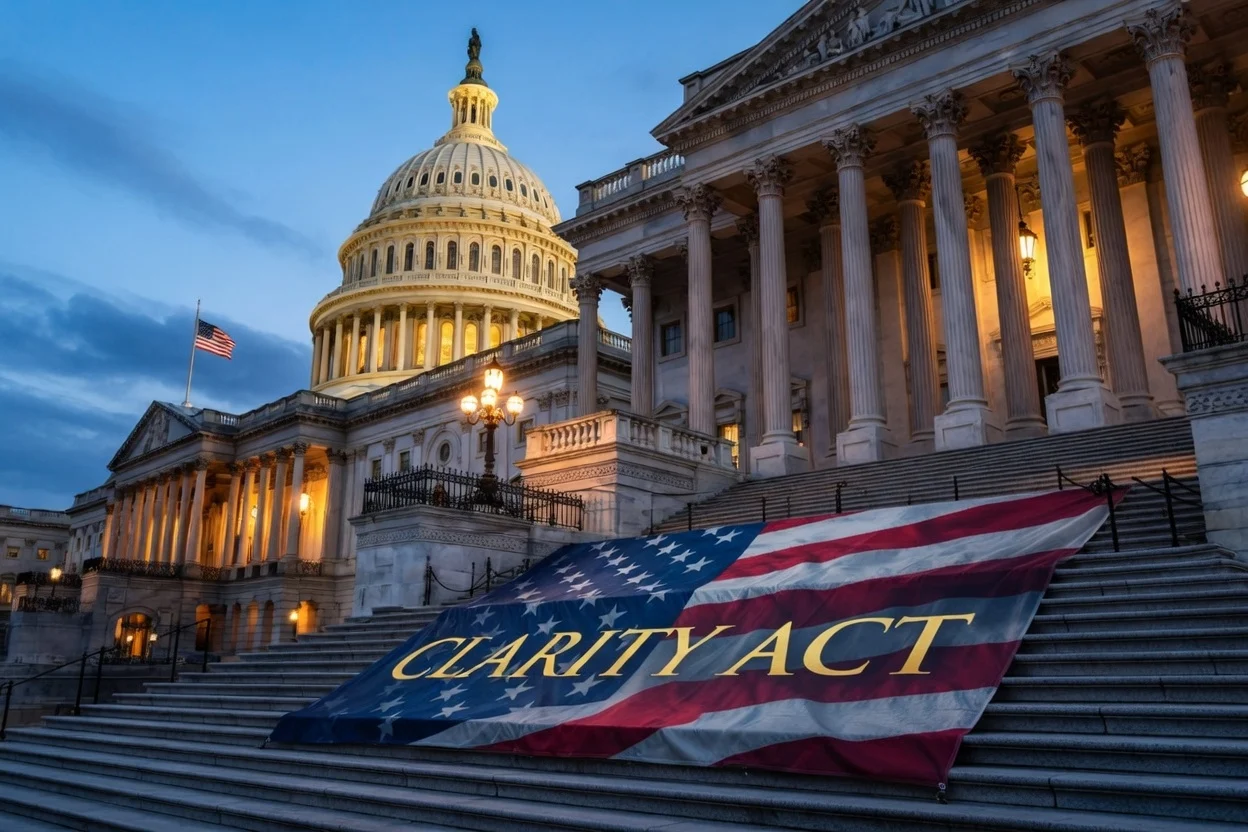
- Congressional deliberations on the Clarity Act proceed independently from tax policy considerations.
The administration has introduced a comprehensive budget framework addressing cryptocurrency taxation while legislative efforts on digital asset regulation progress separately. This initiative focuses on eliminating existing tax advantages available to cryptocurrency traders through strategic loss harvesting. Congressional committees simultaneously examine the Clarity Act, which establishes regulatory frameworks and jurisdictional boundaries for digital markets.
Parallel Paths: Clarity Act Deliberations and Tax Policy Development
Congressional committees maintain active review of the Clarity Act, designed to establish regulatory clarity for digital asset markets across the United States. The bill aims to delineate supervisory authority and establish standardized compliance protocols for cryptocurrency businesses. Meanwhile, the administration pursues tax reform through budget channels operating independently from regulatory legislation.
Administration representatives characterize these tax measures as efforts to establish consistency across different investment categories. Policy documents emphasize that cryptocurrency should face identical tax treatment as traditional equity instruments. According to official statements, “The objective centers on creating uniformity throughout financial markets rather than imposing additional burdens.”
The budget framework would apply wash sale restrictions to cryptocurrency transactions for the first time. Current tax classification treats cryptocurrency as property rather than securities. This distinction allows investors to harvest tax losses and immediately reacquire positions without waiting periods.
Once enacted, the revised regulations would prohibit loss deductions when investors repurchase within a 30-day timeframe. This approach duplicates longstanding requirements governing equity markets and enforced by revenue authorities. Consequently, market participants must reconsider tactical approaches dependent on immediate position reestablishment.
Energy Taxation and Enhanced Disclosure Requirements Broaden Regulatory Scope
The budget framework incorporates a 30% excise levy on electrical power consumed during cryptocurrency mining activities. Administration officials designate this provision as the Digital Asset Mining Energy tax, abbreviated as DAME. Policy justifications connect the levy to energy consumption patterns and environmental sustainability objectives.

The framework establishes a graduated implementation schedule spanning multiple fiscal years. Application targets enterprises consuming substantial electricity volumes for validation activities. According to policy documentation, “The levy harmonizes energy expenditures with comprehensive economic strategy priorities.”
Additionally, the framework expands Foreign Account Tax Compliance Act obligations to include digital assets. American taxpayers maintaining foreign cryptocurrency accounts valued above $50,000 must report these positions. This mandate extends current disclosure standards governing conventional offshore financial arrangements.
These coordinated provisions aim to enhance visibility and eliminate disclosure deficiencies regarding international cryptocurrency positions. Regulatory authorities have expressed concern regarding unreported assets maintained beyond American jurisdiction. The framework seeks to incorporate these holdings within established compliance structures.
Historical Context and Present Legislative Standing
Previous attempts to implement wash sale restrictions on cryptocurrency have emerged during earlier administrations. Budget proposals from both Obama and Biden administrations featured comparable provisions. Congressional bodies declined to advance those initiatives during their respective periods.
Current legislative developments demonstrate varied priorities within cryptocurrency policy conversations. The Senate Banking Committee maintains comprehensive examination of Clarity Act provisions and implications. Simultaneously, tax-related components undergo separate evaluation within budget reconciliation procedures.
Regulatory bodies continue developing rule proposals connected to cryptocurrency market infrastructure. The Securities and Exchange Commission maintains review of numerous ETF-related submissions involving Bitcoin and XRP. These filings encompass extensive regulatory modifications under active consideration.
The administration’s budget framework now enters congressional evaluation for examination and possible modification. Legislative bodies will establish whether tax components advance concurrently with regulatory legislation. Final determination depends on continuing comm
Get 3 Free Stock Ebooks
Discover top-performing stocks in AI, Crypto, and Technology with expert analysis.
- Top 10 AI Stocks - Leading AI companies
- Top 10 Crypto Stocks - Blockchain leaders
- Top 10 Tech Stocks - Tech giants



