



Key Takeaways
- Brent crude climbed above $123 per barrel, marking the highest price point since March 2022
- President Trump received briefings on potential military operations against Iran, including targeted strikes and naval blockade plans
- Diplomatic negotiations between Washington and Tehran have broken down following Iran’s recent proposal
- Iran continues to control the Strait of Hormuz, charging transit fees for vessel passage
- Market analysts at ING caution that demand destruction could become the primary rebalancing mechanism
Global oil markets experienced a dramatic surge on Thursday, with prices climbing to their highest levels in four years as tensions between the United States and Iran threatened to escalate into renewed military confrontation.
The international benchmark Brent crude for June delivery momentarily reached $123 per barrel during early European market hours, representing its peak value since March 2022. Meanwhile, West Texas Intermediate futures similarly advanced, hitting approximately $108 per barrel before moderating later in the trading day.
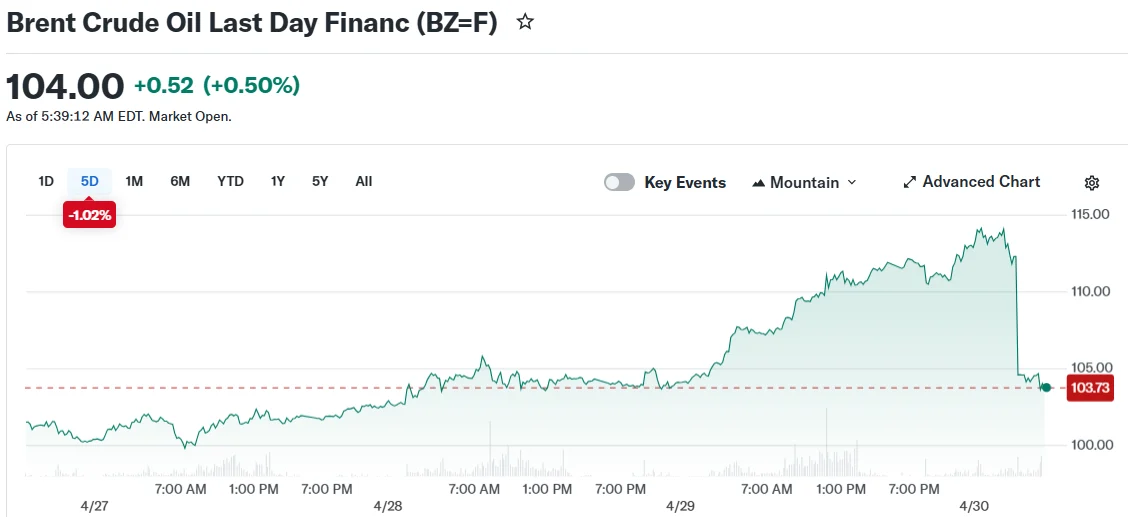
The price acceleration followed reports from Axios indicating that President Trump was scheduled to receive a comprehensive military briefing from Admiral Brad Cooper, commander of U.S. Central Command, outlining various strategic options.
According to the report, the proposed options encompassed a series of coordinated strikes targeting Iranian facilities, specialized military operations aimed at securing Iran’s enriched uranium reserves, and strategic initiatives to restore free passage through the Strait of Hormuz.
This military briefing comes after multiple rounds of unsuccessful diplomatic engagement between the two nations. Sources indicate that Trump conveyed to senior advisors his belief that Tehran’s most recent offer — involving the reopening of the strategic waterway while postponing nuclear discussions — demonstrated a lack of genuine commitment to negotiations.

According to reporting by The Wall Street Journal, Trump has directed his team to develop comprehensive plans for a sustained naval blockade of Iranian waters and has been actively pursuing international partnerships to establish a coalition force dedicated to restoring maritime access.
However, key American allies have been reluctant to participate in such operations. Trump has previously expressed frustration with NATO partners for their unwillingness to provide military support to U.S. and Israeli efforts during the conflict’s initial phase.
Strategic Waterway Remains Closed for Third Month
The confrontation with Iran reached its third full month on Thursday. Tehran initiated a blockade of the Strait of Hormuz when hostilities began and has progressively strengthened its control over the critical shipping channel, implementing mandatory transit charges for vessels seeking passage.
The U.S. Navy has reciprocated by establishing its own restrictions targeting ships connected to Iranian ports, creating a strategic deadlock at one of the planet’s most vital oil transit routes.
Analysts at ING noted that the oil market has shifted “from over-optimism to the reality of the supply disruption we are seeing in the Persian Gulf.”
The United Arab Emirates made headlines this week by announcing its intention to withdraw from OPEC, a decision that theoretically opens the door for increased production capacity. Nevertheless, market experts emphasize that the UAE is unlikely to boost output immediately given the ongoing regional instability and war-related complications.
Global Supply Buffer Diminishing
ING’s analysis suggests that current supply shortfalls total approximately 1.6 million barrels daily. The research firm cautioned that as the disruption persists, market equilibrium will increasingly depend on demand destruction rather than drawing down strategic inventories.
“The only way to drive this would be through higher oil prices,” according to ING’s assessment.
Brent crude reversed course during Thursday afternoon trading, declining 0.9% to settle at $117 per barrel by the midday session. The June Brent futures contract is scheduled to reach expiration on Thursday.
Military planners at U.S. Central Command have allegedly developed a blueprint for a “short and powerful” series of precision strikes targeting Iranian infrastructure, although no official authorization has been announced publicly.
Get 3 Free Stock Ebooks
Discover top-performing stocks in AI, Crypto, and Technology with expert analysis.
- Top 10 AI Stocks - Leading AI companies
- Top 10 Crypto Stocks - Blockchain leaders
- Top 10 Tech Stocks - Tech giants



