


Key Takeaways
- Senator Thom Tillis is demanding that Senate Banking Committee Chairman Tim Scott set a markup hearing for the cryptocurrency market structure legislation
- Congress reconvenes May 11, with Tillis advocating for a mid-May scheduling of the hearing
- Major disagreements center on stablecoin interest payment regulations, governmental ethics standards, and legal safeguards for decentralized finance creators
- Coinbase withdrew its endorsement in January due to a clause prohibiting crypto platforms from offering stablecoin interest
- Approximately 11 weeks remain on the Senate schedule before electoral politics dominate the agenda
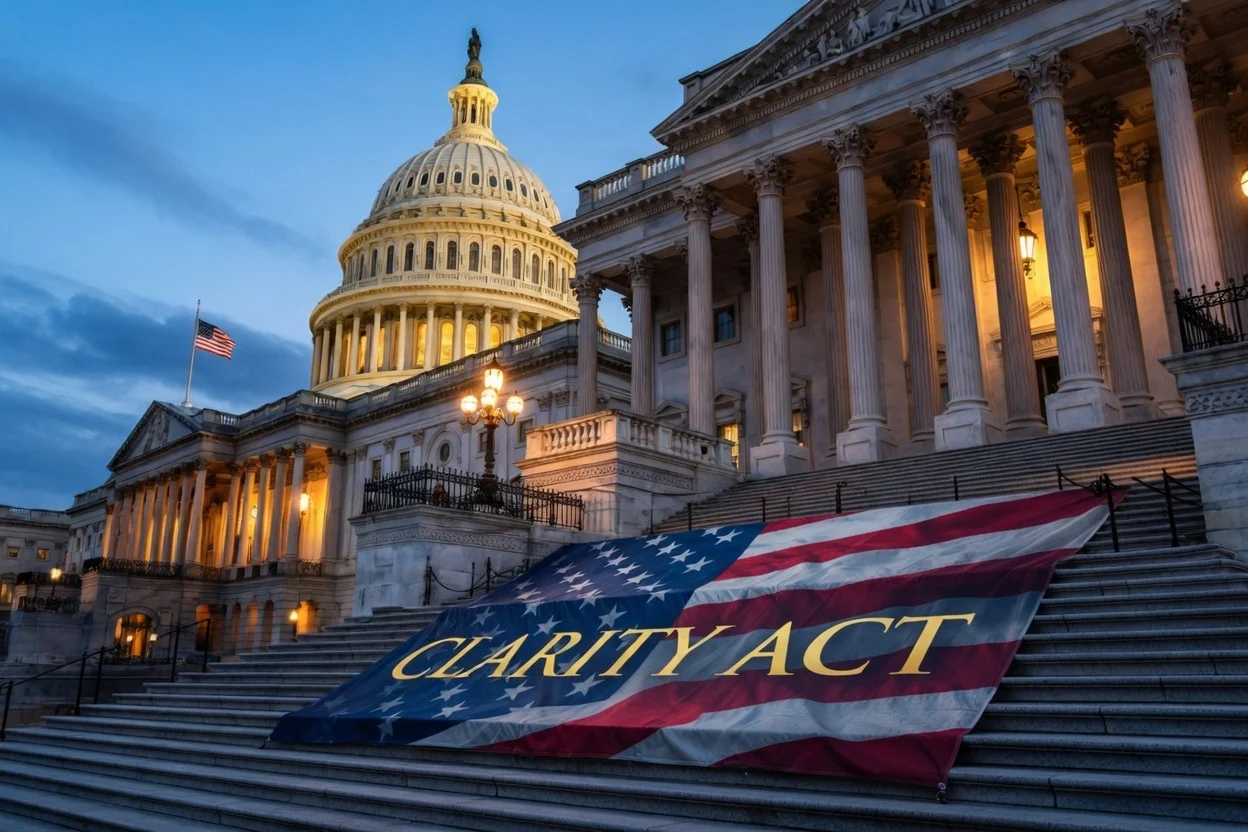
On Wednesday, Senator Thom Tillis announced his intention to pressure the Senate Banking Committee into scheduling a decisive vote on the cryptocurrency market structure legislation, commonly referred to as the CLARITY Act.
Tillis informed journalists that he will request Committee Chair Tim Scott to proceed with a markup session following the Senate’s return from recess on May 11.
“Without the forcing function of a markup, every opponent will continuously find another issue to debate,” Tillis explained.
The proposed legislation aims to establish clear jurisdictional boundaries between the SEC and CFTC regarding cryptocurrency oversight. While the House approved its corresponding bill in July 2025, the Senate counterpart has encountered multiple postponements.
The primary obstacle involves disputes surrounding stablecoin interest payments. [[LINK_START_0]]Coinbase[[LINK_END_0]] rescinded its backing in January following the insertion of language prohibiting cryptocurrency exchanges from distributing stablecoin yields to users.
Traditional banking industry representatives have advocated for maintaining this restriction. Their position maintains that it addresses a regulatory gap in the GENIUS Act, which already prohibits stablecoin issuers from distributing yields.
Tillis indicated that banking sector apprehensions have been substantially resolved. He emphasized that while financial institutions remain free to participate in discussions, he refuses to delay indefinitely.

Yield Restrictions and Government Ethics Language Under Debate
Tillis confirmed his commitment to distributing the revised legislative text to interested parties no less than four days prior to any markup proceeding.
Regarding ethics requirements, Tillis stated Monday that he would oppose the measure unless it contains provisions restricting how government personnel can financially benefit from or endorse cryptocurrencies.
“Ethics provisions must be included in the bill before Senate passage, or I’ll transition from negotiator to opposition voter,” Tillis declared.
Observers broadly interpret this requirement as directed toward President Trump and his relatives, who maintain cryptocurrency-related financial holdings.
Legal Protections for DeFi Developers Encounter Additional Obstacles
An additional outstanding matter concerns liability protections for programmers creating decentralized finance applications.
Senator Chuck Grassley, leading the Judiciary Committee, has indicated that such provisions require review by his committee before advancement. This jurisdictional claim threatens additional postponements.
On Wednesday, Tillis expressed being “generally supportive” of the work Senator Cynthia Lummis has accomplished regarding this section.
Cody Carbone, CEO of the Digital Chamber, commented: “We’re seeing unprecedented momentum toward a May markup.”
The legislation faces approximately 11 weeks of available Senate floor time before campaign season dominates the calendar. Upon Senate approval, the bill would return to the House, which enacted its own version in 2025.
Get 3 Free Stock Ebooks
Discover top-performing stocks in AI, Crypto, and Technology with expert analysis.
- Top 10 AI Stocks - Leading AI companies
- Top 10 Crypto Stocks - Blockchain leaders
- Top 10 Tech Stocks - Tech giants



