


Key Highlights
- Iranian ballistic missiles targeted Qatar’s Ras Laffan LNG facility, inflicting significant damage on the Pearl GTL complex, the planet’s largest gas-to-liquids operation
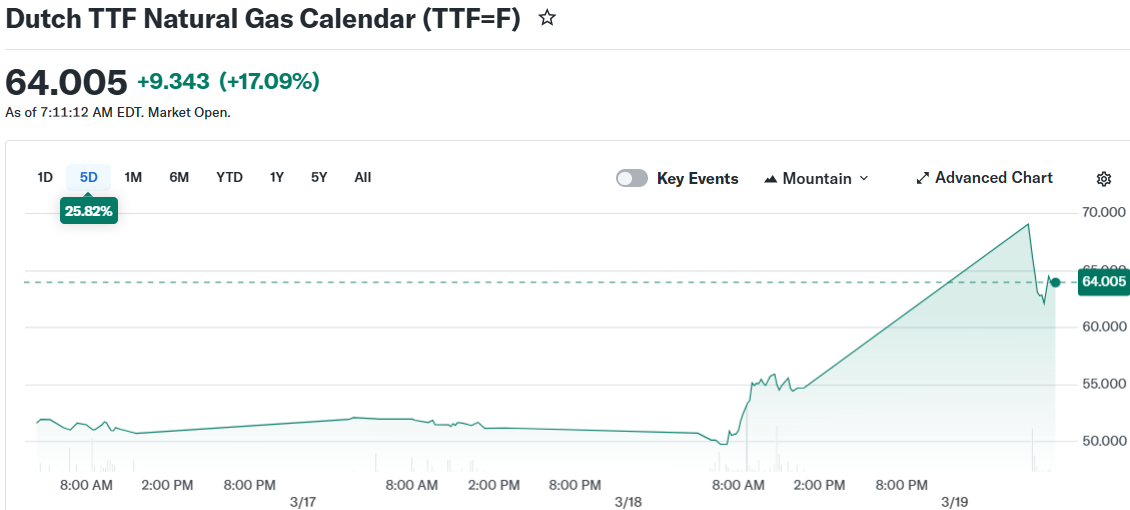
- Brent crude oil soared 8.1% to reach $116.12 per barrel; Dutch TTF natural gas futures exploded 26.1% to €69.1 per megawatt-hour
- Israeli forces targeted Iran’s South Pars gas infrastructure; President Trump issued threats to completely destroy South Pars if Qatar faces further Iranian aggression
- Crude oil values have climbed approximately 50% since hostilities commenced, pushing US gasoline to $3.84 per gallon — the highest level in 24 months
- Energy facilities in Saudi Arabia, Kuwait, and the United Arab Emirates also sustained drone and missile damage
In the early hours of Thursday, Iran deployed ballistic missiles against Qatar’s Ras Laffan industrial zone, targeting one of the globe’s most critical liquefied natural gas production centers. The assault inflicted widespread destruction, igniting fires throughout numerous LNG facilities and causing catastrophic damage to the Pearl GTL plant — recognized globally as the largest gas-to-liquids conversion facility.
Brent crude oil prices surged 8.1% to $116.12 per barrel in the aftermath of the military action. Dutch TTF natural gas contracts skyrocketed 26.1% to €69.1 per megawatt-hour. Since the onset of the conflict, overall petroleum prices have climbed roughly 50%.
QatarEnergy, the state-controlled energy company, acknowledged the extensive nature of the damage. International buyers immediately began competing for available uncontracted LNG shipments, driving prices to new heights.
The Ras Laffan complex serves as a vital LNG supplier to European markets and key Asian consumers, including Japan, South Korea, India, and China. European nations are operating with limited natural gas reserves following an exceptionally cold winter season and maintain substantial dependence on Qatari LNG to compensate for discontinued Russian pipeline deliveries.
In contrast to oil markets, the global LNG sector lacks strategic reserve systems for emergency supply. This fundamental vulnerability is amplifying price volatility and accelerating market movements.

The Iranian military campaign extended beyond Qatar. Saudi Arabia documented drone and missile assaults on petroleum refining facilities located in Yanbu and Riyadh. Kuwaiti authorities confirmed a drone strike on the Mina Abdullah refinery that ignited a blaze, which emergency crews subsequently extinguished.
Trump Issues Ultimatum Over South Pars Gas Field
President Donald Trump clarified that the United States played no role in Israel’s preceding military operation against Iran’s South Pars gas field. Through a Truth Social statement, he indicated that Israel would refrain from additional strikes on the installation — provided Iran does not escalate tensions.
Trump delivered an explicit warning that any subsequent Iranian attacks on Qatari LNG infrastructure would prompt the United States to “massively blow up the entirety” of the South Pars field. Following his public statements, oil prices moderated slightly and stock index futures climbed.
The President also suspended a century-old maritime transportation regulation to reduce expenses associated with domestic energy product shipments. Vice President JD Vance scheduled meetings with petroleum industry executives for Thursday.
Iranian President Masoud Pezeshkian declared that strikes against Iranian energy assets would “yield nothing” and issued warnings about potential consequences that could “engulf the entire world.”
Iraqi officials reported widespread electrical blackouts after Iran terminated natural gas deliveries to the nation.
Financial Markets Respond as Conflict Reaches Day 19
The ongoing military confrontation has effectively blocked the Strait of Hormuz to most commercial shipping for 19 consecutive days. American gasoline prices reached $3.84 per gallon on Wednesday — marking the highest cost in more than two years.
Vance characterized the price increase as “a temporary blip.” Former General David Petraeus cautioned that Iran maintains “a very resilient regime” supported by approximately one million armed personnel.
Iran also launched strikes against Tel Aviv, resulting in two civilian fatalities. Israeli air force jets conducted bombing operations in northern Iran for the first time since hostilities began. The war’s cumulative death toll has exceeded 4,000 casualties.
Foreign ministers representing 12 nations issued joint condemnation of attacks targeting energy infrastructure and demanded Iran immediately cease further military strikes.
Get 3 Free Stock Ebooks
Discover top-performing stocks in AI, Crypto, and Technology with expert analysis.
- Top 10 AI Stocks - Leading AI companies
- Top 10 Crypto Stocks - Blockchain leaders
- Top 10 Tech Stocks - Tech giants



