


Key Takeaways
- President Trump used Truth Social to publicly criticize banks, claiming they’re sabotaging the GENIUS Act stablecoin legislation
- The dispute revolves around allowing third-party services to provide yield on customer-held stablecoins
- Banking institutions claim stablecoin yield offerings could lead to massive deposit outflows from traditional banks
- A Senate Banking Committee markup session was delayed in January following Coinbase’s withdrawal of support
- House Financial Services Committee Chair French Hill proposed the Senate adopt the House version of the CLARITY Act
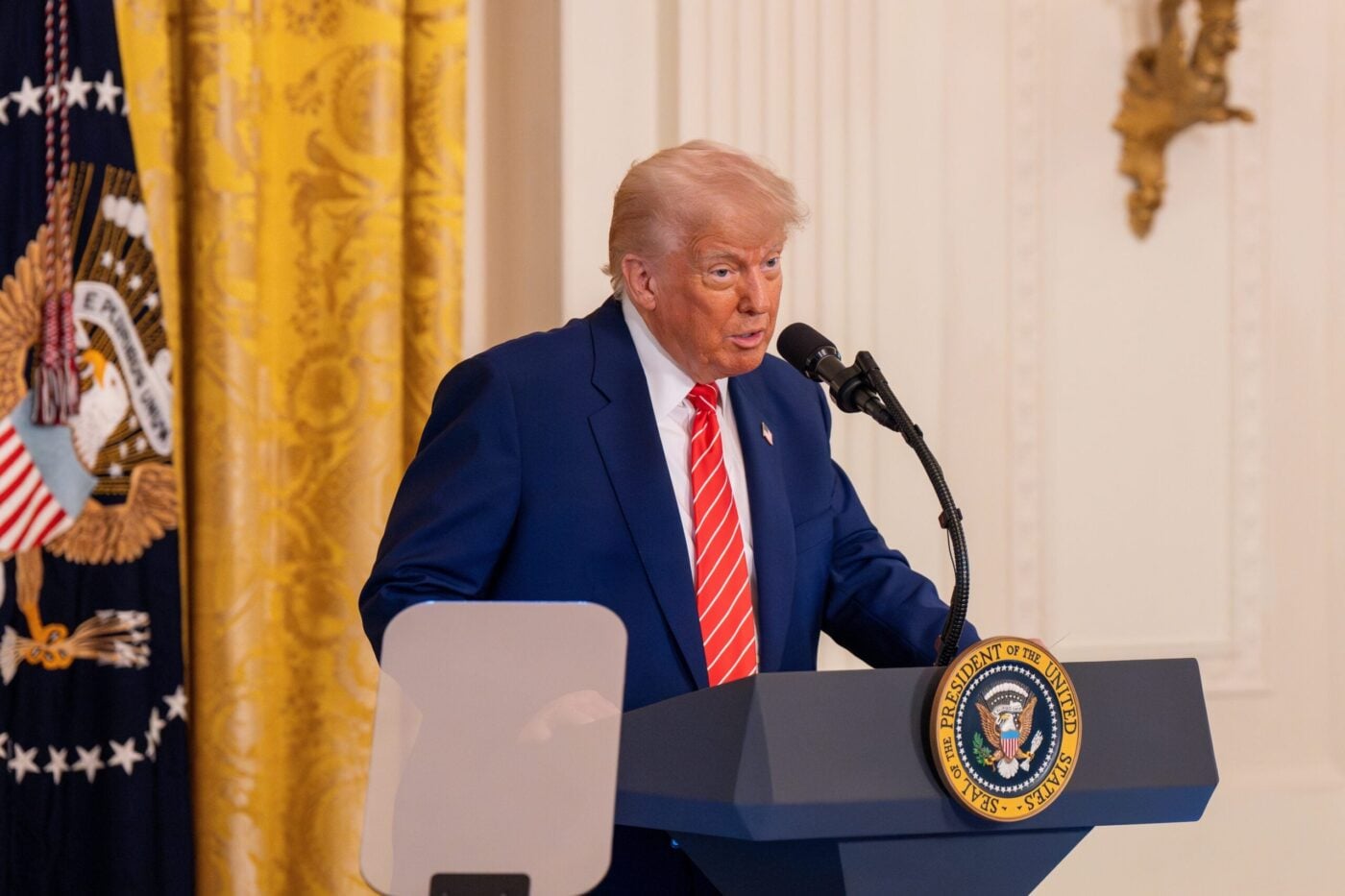
President Trump used his Truth Social platform on Tuesday to criticize the banking industry for obstructing cryptocurrency regulation.
He claimed banks are jeopardizing the GENIUS Act — the stablecoin legislation he enacted in July — while attempting to prevent passage of the CLARITY Act, a comprehensive crypto market structure bill stuck in the Senate.
“The Banks are hitting record profits, and we are not going to allow them to undermine our powerful Crypto Agenda,” Trump declared.
The GENIUS Act establishes regulatory frameworks for stablecoins while prohibiting issuers from offering direct yield payments to token holders. Nevertheless, third-party service providers such as cryptocurrency exchanges remain permitted to offer yield products to their customers.
The banking sector wants this exception eliminated. Their position is that permitting platforms like Coinbase to provide stablecoin yields would drive customer deposits away from conventional banking institutions.
Cryptocurrency firms and their representatives have vigorously opposed any prohibition on yield offerings.
Coinbase withdrew its endorsement of the Senate legislation in January due to this controversy. This action prompted the Senate Banking Committee to delay its scheduled markup session indefinitely.

Reasons Behind the Legislative Delay
The White House has facilitated no fewer than three negotiation sessions between banking representatives and crypto industry leaders this year to hammer out acceptable bill language.
A tentative end-of-February White House deadline came and went without any compromise being reached.
Proposed legislative text is apparently being shared among lawmakers, though no formal agreement has been publicly announced.
Time is running short in the Senate. The summer legislative break looms ahead, and the 2026 midterm campaign season is accelerating.
French Hill’s Recommendation
House Financial Services Committee Chair French Hill offered his perspective during a separate Tuesday appearance.
He noted that the CLARITY Act, which secured passage in the House with support from 78 Democrats, already established that stablecoins function as payment instruments rather than investment vehicles and therefore shouldn’t generate direct interest.
Hill suggested the Senate simply adopt the House bill’s provisions if senators cannot reach their own consensus.
“If the Senate can’t come to a straightforward conclusion here, I recommend they use the language that we have in the House-passed Clarity Act,” Hill stated.
Trump also mentioned World Liberty Financial, a company with ties to his family that issues its own stablecoin token named USD1.
The Office of the Comptroller of the Currency released a proposed regulation last week stating that agreements between stablecoin issuers and third-party partners must explicitly define what those partners are providing — though it fell short of outright prohibiting yield payments.
Trump’s statement followed several days during which his attention was focused on U.S. military operations against Iran, which have caused disruptions to aviation and maritime shipping throughout the Middle East.
Get 3 Free Stock Ebooks
Discover top-performing stocks in AI, Crypto, and Technology with expert analysis.
- Top 10 AI Stocks - Leading AI companies
- Top 10 Crypto Stocks - Blockchain leaders
- Top 10 Tech Stocks - Tech giants



