



TLDR
- Crude oil markets advanced approximately 0.3% on Thursday before the third installment of nuclear negotiations between Washington and Tehran in Geneva
- Market analysts from ING estimate a successful diplomatic agreement could eliminate as much as $10 per barrel in geopolitical risk currently embedded in pricing
- American crude stockpiles surged by 16 million barrels during the previous week, marking the most substantial accumulation in close to three years
- The OPEC+ alliance is anticipated to authorize the resumption of production hikes beginning in April during upcoming weekend discussions
- Normalized Kazakh crude shipments and declining offshore storage volumes indicate improving physical market supply conditions
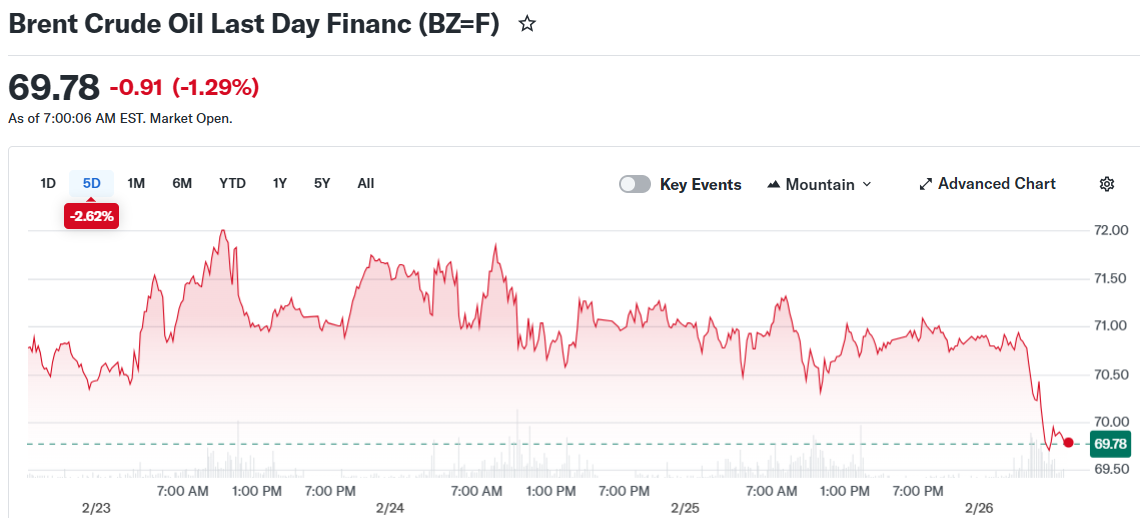
Crude oil markets registered modest gains on Thursday as market participants adjusted positions in anticipation of the third diplomatic session between Washington and Tehran focused on nuclear matters. Brent benchmark crude advanced 0.3% to approximately $71 per barrel, while West Texas Intermediate posted comparable gains reaching roughly $65.55.
The diplomatic engagement is taking place in Geneva. Special envoy Steve Witkoff alongside Jared Kushner representing the United States are slated to convene with Iranian representatives to address Tehran’s nuclear ambitions and ballistic missile development.
Iran’s Foreign Minister Abbas Araqchi indicated that a diplomatic resolution remains achievable provided both parties approach negotiations with constructive intent. President Trump has cautioned that negative consequences could materialize absent substantial progress.
Trump established a 10-to-15-day deadline for reaching agreement and maintained pressure on Tehran throughout his State of the Union remarks. Market observers at Tradu highlighted that American military positioning in the Middle East maintains the possibility of armed confrontation.
Iran represents one of OPEC’s more significant producing nations. Any interference with its production capacity, or with transit through the Strait of Hormuz, carries potential to drive crude prices substantially higher.

Analysts at ING indicated that positive negotiation outcomes could result in gradual elimination of up to $10 per barrel in geopolitical risk premium they assess is currently factored into market pricing. Should negotiations collapse, upside risk persists, though markets may adopt a wait-and-see posture regarding how aggressively the U.S. pursues escalation before fully pricing in consequences.
Abundant Supply Creates Downward Price Pressure
Regarding supply fundamentals, information released by the U.S. Energy Information Administration contributed bearish pressure. Commercial crude inventories expanded by 16 million barrels during the week concluding February 20. This substantially exceeded market forecasts and represented the largest single-week accumulation since February 2023.
Gasoline stockpiles contracted by approximately 1 million barrels over the identical timeframe. Distillate inventories experienced modest growth of roughly 250,000 barrels, while refining activity decreased.
Additionally, pricing differentials between prompt delivery and deferred Brent crude futures have deteriorated. This pattern generally indicates the physical oil market is experiencing improved supply availability.
Kazakh crude shipments via the Caspian Pipeline Consortium terminal are normalizing following previous interruptions. Offshore storage capacity is also contracting, which market analysts interpret as evidence that previously sanctioned volumes are now securing purchasers.
OPEC+ Production Strategy Under Consideration
The OPEC+ coalition is scheduled to convene during the upcoming weekend. ING analysts project the organization will authorize the restart of output increases commencing in April.
Should this materialize concurrent with U.S.-Iran tension reduction, analysts suggest weakened market fundamentals would probably translate to lower absolute pricing for crude. The convergence of expanding stockpiles, returning production capacity, and a prospective Iran agreement provides the market with multiple rationales for pricing in declines.
The Geneva diplomatic talks were scheduled for later on Thursday, February 26.
Get 3 Free Stock Ebooks
Discover top-performing stocks in AI, Crypto, and Technology with expert analysis.
- Top 10 AI Stocks - Leading AI companies
- Top 10 Crypto Stocks - Blockchain leaders
- Top 10 Tech Stocks - Tech giants



