


Key Takeaways
- Nvidia’s Q4 fiscal 2026 results arrive Wednesday after market close, with Wall Street projecting $61 billion in data center sales, representing 70% annual growth.
- Earnings per share estimates stand at $1.53 on an adjusted basis, compared to $0.89 in the prior-year quarter.
- The critical metric investors are monitoring is gross margin — projections hover around 75%, with any decline potentially indicating eroding pricing strength.
- Rivals are gaining ground, as Meta recently inked a significant GPU agreement with AMD, and major cloud providers build proprietary AI accelerators.
- Shares of Nvidia have remained relatively stagnant since October with a 3.4% gain, while AMD stock has surged 32% during the same timeframe.
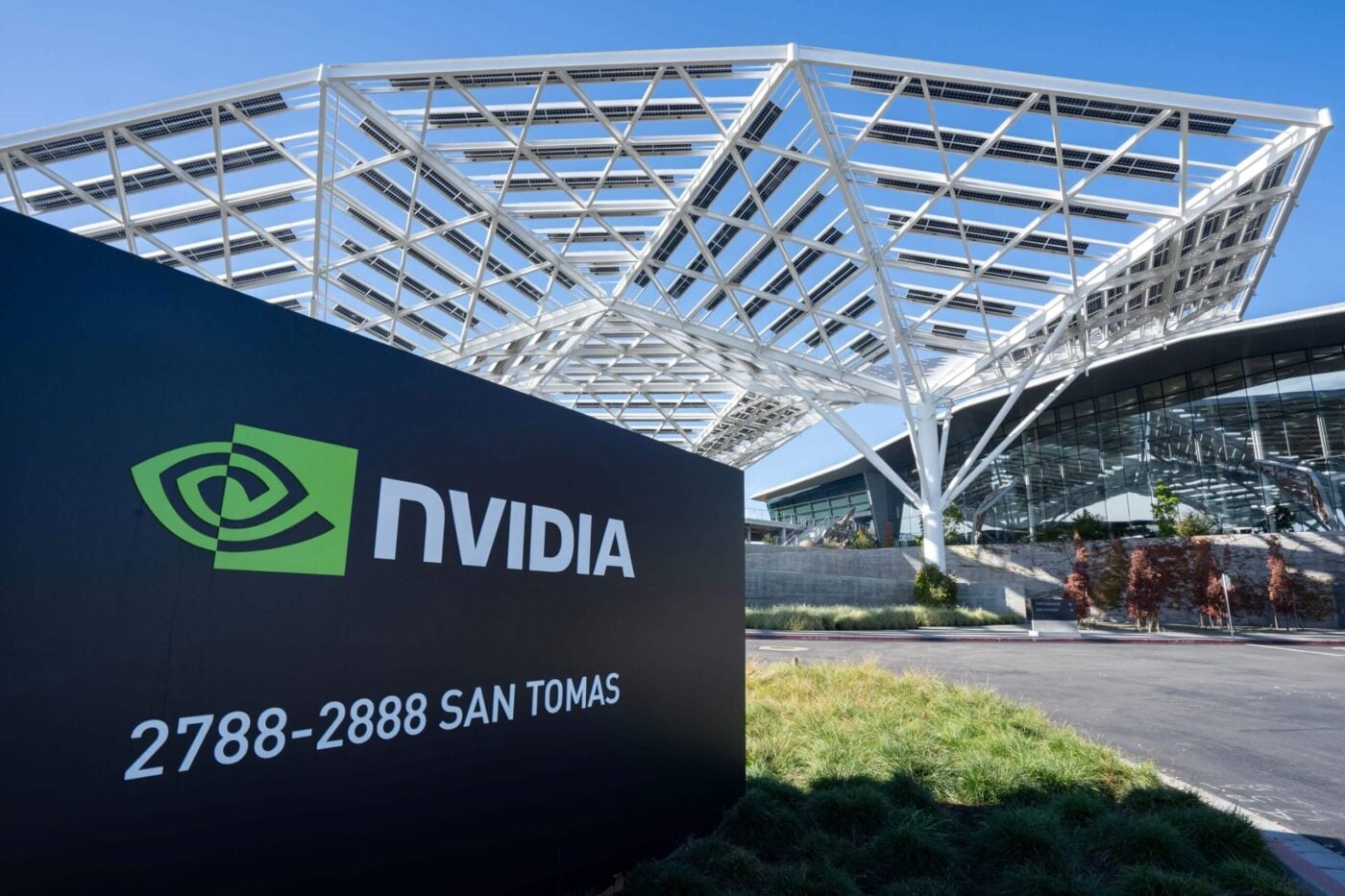
The chip giant is scheduled to unveil its fourth-quarter fiscal 2026 financial results following Wednesday’s trading session on February 25.
Investors are paying close attention. Analyst consensus compiled by FactSet anticipates $61 billion in quarterly data center sales — marking a 70% surge compared to last year’s corresponding period.
For context, Nvidia generated merely $3.6 billion in data center revenue during Q4 2023, coinciding with ChatGPT’s emergence. The expansion trajectory has been remarkable.
Projections for adjusted earnings per share sit at $1.53, climbing from $0.89 twelve months earlier — representing 72% growth.

However, Wall Street analysts emphasize that the most crucial metric extends beyond revenue or earnings. The focal point is gross margin.
Gross Margin Takes Center Stage
Analyst expectations place Nvidia’s gross margin around 75% for the reporting period, compared to 73% a year prior. Under GAAP accounting standards, the estimate reaches 74.8%.
This metric carries significant weight because it reveals whether Nvidia maintains its ability to command premium prices for graphics processing units.
Two factors have sustained this pricing advantage: the exceptional capabilities of Nvidia’s Hopper and Blackwell GPU architectures, combined with persistent demand exceeding available supply.
Should Nvidia project fiscal 2027 gross margins within the 74–75% range or above, market participants would interpret this favorably. Such guidance would indicate customers remain willing to pay premium rates for forthcoming products including Blackwell Ultra and the Vera Rubin GPU platform.
Conversely, if gross margin forecasts drop into the low 70s or beneath, it would paint a concerning picture — suggesting competitive forces are beginning to impact pricing dynamics.
Rivals Intensify Market Pressure
The competitive environment has evolved considerably in recent months.
This week, Meta Platforms announced a substantial partnership with AMD to deploy its GPUs across select data facilities. This marks the second major AMD partnership recently — OpenAI established a comparable arrangement last October.
Both agreements included AMD granting warrants enabling the purchase of approximately 10% of its shares at one cent each, contingent on achieving specific performance benchmarks. While Nvidia maintains relationships with both Meta and OpenAI, it has not provided similar equity incentives.
Amazon Web Services, Microsoft Azure, and Google Cloud are each advancing proprietary AI processor development for client offerings. Multiple AI chip startups are simultaneously vying for market share.
AMD’s data center revenue remains below one-tenth of Nvidia’s scale and demonstrated slower growth when AMD disclosed its own Q4 performance earlier in February.
Notwithstanding substantial AI infrastructure investment forecasts for 2026, Nvidia shares have traded essentially sideways since October — advancing merely 3.4% while AMD stock has climbed 32% across the identical timeframe.
Nvidia concluded Tuesday’s trading at $192.85, gaining 0.7% for the session.
CEO Jensen Huang will conduct an analyst conference call at 5 p.m. Eastern on Wednesday after the earnings announcement.
Get 3 Free Stock Ebooks
Discover top-performing stocks in AI, Crypto, and Technology with expert analysis.
- Top 10 AI Stocks - Leading AI companies
- Top 10 Crypto Stocks - Blockchain leaders
- Top 10 Tech Stocks - Tech giants



