


TLDR
- Home Depot surpassed analyst expectations for Q4 with earnings per share of $2.72 versus the anticipated $2.54, and revenue reaching $38.20B against the $38.12B forecast
- Year-over-year Q4 sales declined 3.8%, with one fewer week in the fiscal period contributing to the decrease
- The retailer increased its quarterly dividend payment by 1.3% to $2.33 per share, extending its streak to 156 consecutive quarterly dividends
- CFO Richard McPhail described the current market as a “frozen housing environment” spanning three years, with mounting consumer apprehension
- For fiscal 2026, Home Depot projects total sales growth between 2.5% and 4.5%, while continuing to assess implications of Trump’s suggested 15% universal tariff policy
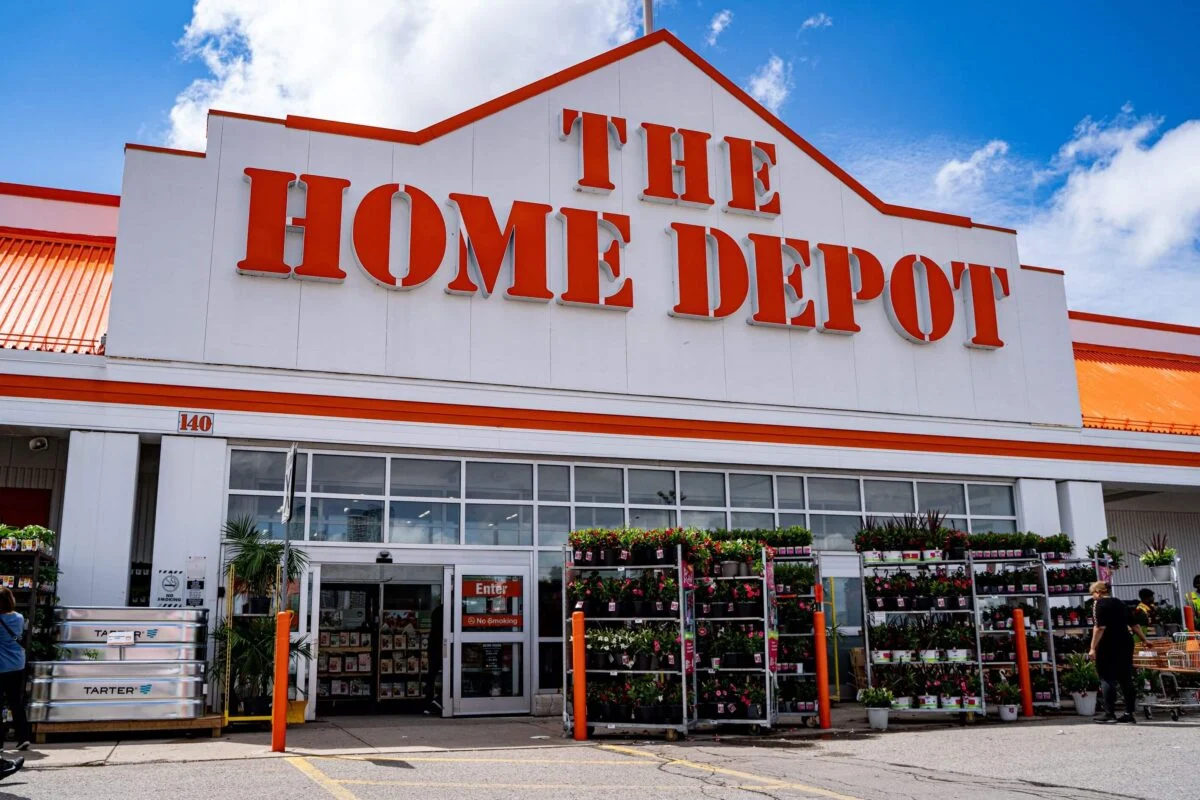
Home Depot released its fiscal 2025 fourth-quarter financial results on Tuesday, exceeding Wall Street projections for both earnings and revenue even as overall sales contracted.
The company’s adjusted earnings per share reached $2.72, surpassing the analyst consensus of $2.54. Revenue totaled $38.20 billion, narrowly beating expectations of $38.12 billion. This marked the company’s first earnings outperformance following three consecutive quarters of misses.
Total revenue decreased 3.8% compared to the corresponding quarter last year, falling from $39.70 billion to $38.20 billion. Management attributed approximately $2.5 billion of this reduction to a calendar difference—the previous year’s quarter contained 14 weeks compared to 13 weeks in the current period.
Comparable store sales—which account for factors such as new store openings—increased 0.4% across the entire business and 0.3% specifically in U.S. markets.

Quarterly net income reached $2.57 billion, translating to $2.58 per diluted share, representing a decline from the prior year’s $3.0 billion, or $3.02 per share.
During an interview with CNBC, CFO Richard McPhail described the current market conditions as a “frozen housing environment for three years.” He highlighted increasing consumer concerns regarding housing affordability and potential employment losses as key factors influencing the company’s conservative forward-looking stance.
Customer transaction counts decreased 1.6% year-over-year, while the average transaction value climbed 2.4%. Large purchases exceeding $1,000 showed growth of 1.3%.
Professional Contractors Drive Growth
While do-it-yourself shoppers have reduced their spending patterns, the professional contractor segment demonstrated stronger performance. McPhail confirmed that Pro sales growth exceeded DIY customer sales in Q4, though he did not disclose precise figures.
The retailer has strategically invested in this segment through major acquisitions. In 2024, it acquired SRS Distribution for $18.25 billion, subsequently adding GMS, a specialty building products distributor, for approximately $4.3 billion.
Home Depot launched 12 new stores during fiscal 2025 and intends to open 15 additional locations in the current fiscal year. Its retail footprint now includes 2,359 stores along with more than 1,250 SRS distribution centers.
Dividend Increase and Tariff Uncertainty
The company announced a 1.3% increase to its quarterly dividend, bringing it to $2.33 per share—representing the 156th consecutive quarter of cash dividend payments. The payment will be distributed on March 26, 2026, to shareholders registered as of March 12, 2026.
Regarding trade policy, McPhail explained that the company continues analyzing implications following the Supreme Court’s decision that invalidated portions of the Trump administration’s import duties. President Trump has subsequently introduced a proposal for a 15% comprehensive global tariff.
“Not all the information is out right now,” McPhail stated. He emphasized that more than half of Home Depot’s merchandise is domestically sourced, and the company is actively diversifying its import base to ensure no individual country beyond the U.S. represents more than 10% of procurement.
For fiscal 2026, Home Depot forecasts total sales growth ranging from 2.5% to 4.5%, comparable sales growth between flat and 2%, and adjusted earnings per share growth between flat and 4% from the fiscal 2025 baseline of $14.69.
The average 30-year fixed mortgage rate dropped to 5.99% on Monday—marking its lowest point since 2022, according to Mortgage News Daily.
Get 3 Free Stock Ebooks
Discover top-performing stocks in AI, Crypto, and Technology with expert analysis.
- Top 10 AI Stocks - Leading AI companies
- Top 10 Crypto Stocks - Blockchain leaders
- Top 10 Tech Stocks - Tech giants



