


Key Takeaways
- Deutsche Bank set a $500 price target for Micron while Needham elevated its forecast to $450 — both maintaining Buy recommendations
- First-quarter fiscal 2026 revenue reached $13.6 billion, marking a 57% annual increase alongside a record $3.9 billion in free cash flow
- The company’s AI-focused memory products have reached full capacity allocation for 2026, facing what executives call an “unprecedented” shortage
- Industry analysts project DRAM pricing to surge 62% and NAND pricing to climb 40% during Q1 2026
- Memory supply bottlenecks are anticipated to persist for a minimum of 12–18 months, as new manufacturing facilities won’t come online before mid-2027
A trio of prominent investment banks have issued favorable ratings on Micron Technology over the last seven days, establishing price projections between $450 and $500 as limited memory availability and accelerating artificial intelligence requirements drive shares upward.
Needham’s equity analyst N. Quinn Bolton increased his valuation from $380 to $450 on February 17. One day earlier, Morgan Stanley’s Joseph Moore maintained his $450 projection with an overweight stance. Deutsche Bank took the most aggressive position, raising its estimate from $300 to $500 on February 10, forecasting that capacity limitations could extend through 2027 and possibly into 2028.
Exceptional Performance Across All Operating Divisions
Micron’s first-quarter fiscal 2026 performance provided substantial validation for analyst optimism. The company reported $13.6 billion in revenue, representing a 21% sequential gain and 57% year-over-year growth — marking the third straight quarterly record.
Gross profit margins expanded to 56.8%, an impressive 11-percentage-point improvement from the previous quarter. The company generated record free cash flow of $3.9 billion.
Each business unit achieved record-breaking revenue: Cloud Memory delivered $5.3 billion, Core Data Center contributed $2.4 billion, Mobile and Client generated $4.3 billion, and Automotive and Embedded brought in $1.7 billion.
Executive Vice President of Operations Manish Bhatia characterized the memory chip supply situation as “unprecedented” in January. Management confirmed that artificial intelligence memory products have reached complete capacity allocation through 2026.

The Dynamics Behind Accelerating Price Growth
Servers designed for artificial intelligence applications demand high-bandwidth memory, commonly known as HBM, to process enormous data volumes. Manufacturing HBM consumes approximately three times the wafer production capacity compared to conventional memory products, which means each HBM unit manufactured reduces availability of alternative memory types and elevates pricing industry-wide.
UBS forecasts that contract DRAM pricing will increase 62% in the first quarter of 2026 compared to the preceding quarter. NAND prices are projected to advance roughly 40%. TrendForce estimates the global memory market will reach $551.6 billion in 2026, expanding to $842.7 billion by 2027.
Manufacturing Expansion Remains Years From Completion
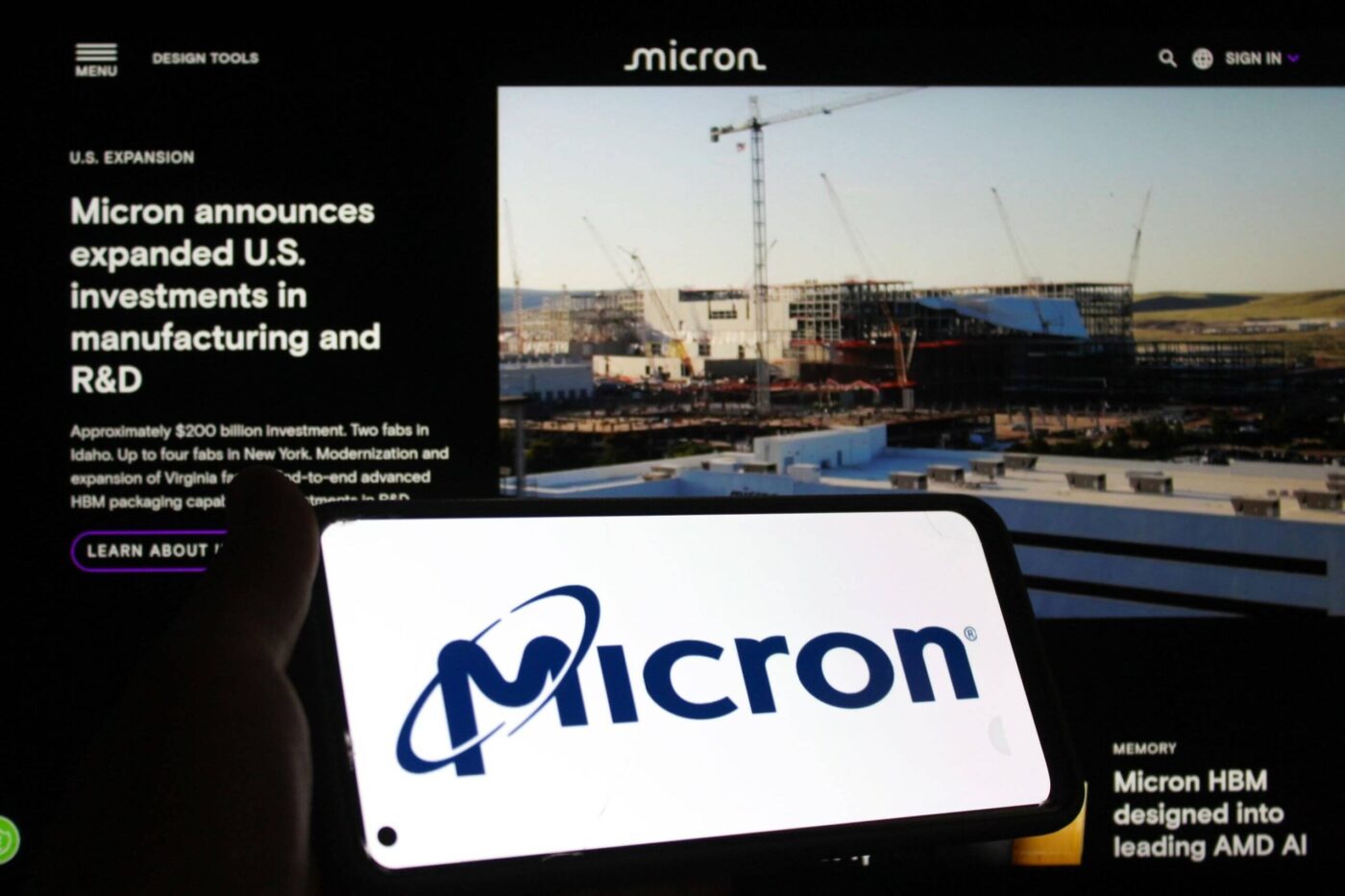
Micron has allocated approximately $200 billion toward expanding its domestic manufacturing footprint, though clean-room facility construction requires extended timelines. The company’s $50 billion Idaho expansion project won’t commence wafer production until mid-2027. A $100 billion facility planned for New York has a target completion date of 2030.
SK Hynix’s Yongin manufacturing complex aims for volume production in late 2027. Samsung is simultaneously increasing capital expenditure from already elevated levels.
This timeline ensures supply limitations will remain firmly established for no less than 12 to 18 months across the three dominant industry participants.
Micron’s upcoming February-quarter financial results, scheduled for release next month, are projected to demonstrate revenue growth exceeding 100% year-over-year, with earnings anticipated to expand more than five times compared to the equivalent period last year.
Get 3 Free Stock Ebooks
Discover top-performing stocks in AI, Crypto, and Technology with expert analysis.
- Top 10 AI Stocks - Leading AI companies
- Top 10 Crypto Stocks - Blockchain leaders
- Top 10 Tech Stocks - Tech giants



