


TLDR
- Alpha Flight 7 “Stairway to Seven” successfully launched from Vandenberg on March 11, achieving orbit and delivering Lockheed Martin’s demonstration payload.
- Shares of FLY climbed approximately 6.24% to roughly $20.60 in trading following the mission.
- This launch occurred five months following an explosion in Texas that destroyed another Alpha vehicle.
- Critical Block II technology was validated during the flight, including upgraded avionics and enhanced thermal shielding.
- Analyst coverage includes eight firms, with five assigning Buy ratings or better and a mean target price of $38.29.
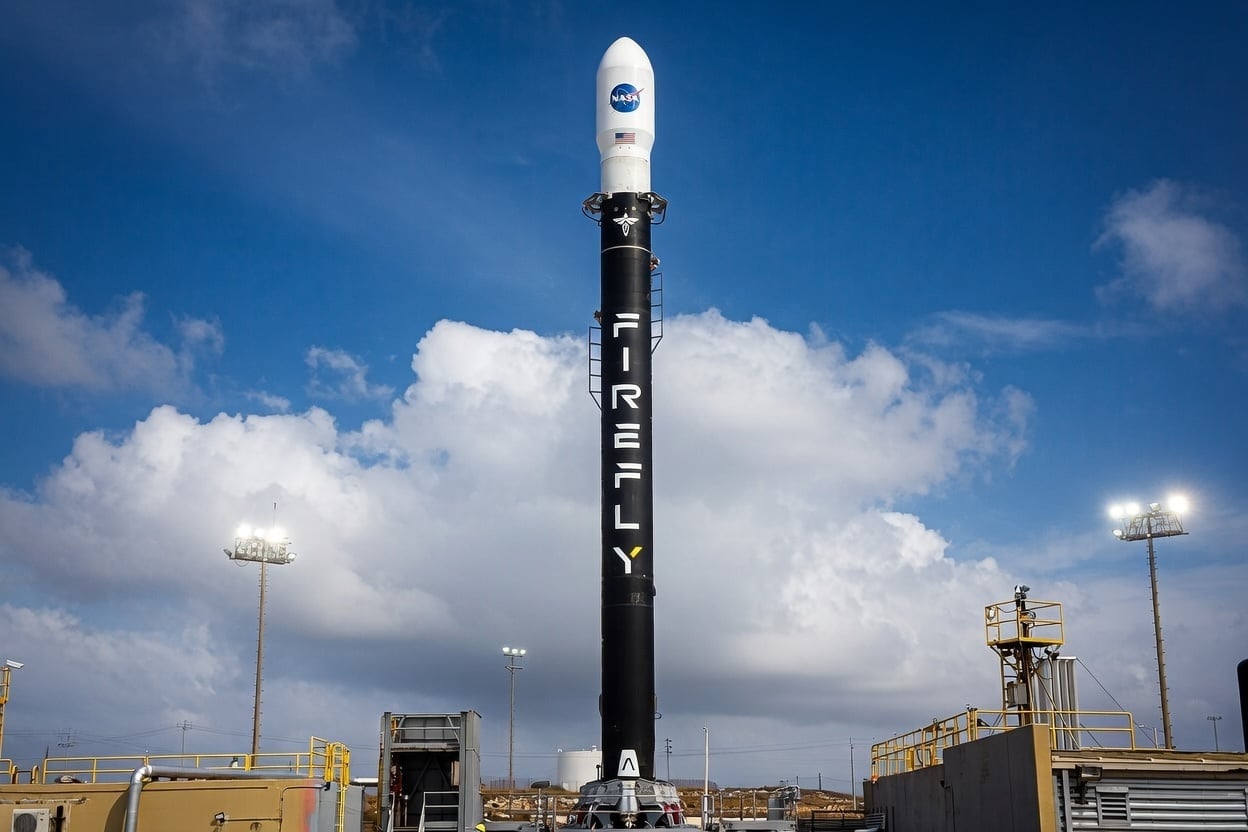
Shares of Firefly Aerospace (FLY) advanced approximately 6.24% during Thursday’s trading session following the successful completion of its Alpha Flight 7 “Stairway to Seven” mission launched the prior evening.
Liftoff occurred from Vandenberg Space Force Base’s Space Launch Complex 2 in California at 5:50 pm Pacific time on March 11. The vehicle achieved orbital insertion and successfully deployed a demonstration spacecraft for Lockheed Martin (LMT).
The mission represents Firefly’s fourth successful orbital delivery across seven Alpha launch attempts dating back to 2021. It also signaled a strong comeback for a program sidelined by last year’s mishap.
Back in October, an Alpha booster was destroyed during a pre-flight explosion at the company’s Texas facility in Briggs. Investigators determined the incident resulted from fluid contamination linked to an operational mistake.

After the mishap, Firefly undertook a comprehensive assessment of its engineering protocols, manufacturing processes, quality testing, and operational procedures. CEO Jason Kim noted the organization “took a hard look at our processes” and implemented numerous enhancements prior to resuming flight operations.
“Alpha Flight 7 was flawlessly executed with all mission requirements completed,” Kim said in a statement.
FLY shares ended Wednesday’s regular trading up 6.3%, then extended gains between 4.8% and 5.6% in after-hours activity. By Thursday’s opening bell, the stock hovered near $20.60, though premarket trading indicated some retreat toward $19.33.
Alpha Block II Upgrades Validated
Flight 7 accomplished more than orbital insertion alone. The Alpha vehicle also executed a second stage engine restart and successfully tested essential elements of the forthcoming Block II design.
Technology validated during the mission includes Firefly’s proprietary avionics platform and an improved thermal protection system. These components will be integrated into the complete Block II configuration scheduled for Alpha Flight 8.
Block II extends the rocket’s overall length by seven feet and features reinforced carbon composite structures manufactured using automated production equipment. Power systems and avionics will be unified and produced internally.
Adam Oakes, Vice President of Launch, characterized Flight 7 as “a critical opportunity to validate Alpha’s performance ahead of our Block II upgrade.”
Stock Still Well Below IPO Highs
Despite Thursday’s upward movement, FLY continues trading approximately 54% beneath its initial public offering price. The company’s Nasdaq debut in August 2025 saw shares rally more than 50% on day one, briefly pushing market capitalization near $10 billion.
The stock’s 52-week trading range spans from $16.00 to $73.80, leaving current prices significantly distant from peak levels.
Analyst sentiment remains predominantly optimistic. Among eight analysts tracking FLY, five maintain Buy ratings or stronger recommendations. Three assign Hold ratings, while zero suggest selling, per Koyfin data.
The consensus price target stands at $38.29, implying approximately 90% upside potential from present trading levels.
Firefly’s immediate focus centers on completing remaining preparations for Alpha Flight 8, which will debut the complete Block II vehicle configuration.
Get 3 Free Stock Ebooks
Discover top-performing stocks in AI, Crypto, and Technology with expert analysis.
- Top 10 AI Stocks - Leading AI companies
- Top 10 Crypto Stocks - Blockchain leaders
- Top 10 Tech Stocks - Tech giants



